
Last updated November 25, 2026
 Sweep & inspection
 Caps & crowns
 Flue relining
 Masonry repair
 Gas fireplace service
Level 1 sweep and inspection to the NFPA 211 annual standard - flue, crown, cap, and flashing checked and photographed
Chimney sweep logs do not sweep chimneys. They loosen some creosote - which then falls where a brush and vacuum still have to collect it.
Chimney Sweep Maintenance Checklist for Tacoma Homeowners
Most chimney problems don’t announce themselves. They start small: a hairline crack in the crown, a little rust on the damper, a bit of debris caught against the cap. None of that feels urgent, so it gets ignored. Then a Tacoma winter of steady rain works its way into the masonry, and by spring the flue that looked fine in October is spalling brick and dropping mortar into the firebox. A crown crack the width of a dime lets in enough rainwater over one season to damage the entire upper flue, and most homeowners have never looked closely at their crown. This guide gives you a component-by-component checklist you can run from the ground and from inside your firebox, tells you which findings mean call a pro and which can wait, and shows you how to log it all so your records hold up for insurance and at resale.
Quick Answer
A chimney maintenance checklist for Tacoma homeowners should cover five components: the cap and crown, the flashing, the exterior masonry, the firebox and damper, and the flue interior. Check the outside of the chimney after the rainy season ends and again before burn season starts. Check the firebox and damper every month you’re burning. Call a professional sweep if you see cracked mortar, a damaged crown, loose flashing, heavy creosote, or any sign of water inside the flue. An annual inspection catches what you can’t see from the ground.
Styles & brands we work with
- Sweep & inspection
- Caps & crowns
- Flue relining
- Masonry repair
- Gas fireplace service
Table of Contents
- The Outside Checklist: What to Inspect From Ground Level
- The Inside Checklist: What to Inspect From the Firebox and Damper
- Call Now vs. Monitor Until Next Service: Matching Triggers to Action
- Seasonal Maintenance Triggers Specific to Tacoma
- What You Can Handle Yourself vs. What Needs a Credentialed Sweep
- How to Log Your Maintenance History (and Why It Matters in Pierce County)
- Your Annual Chimney Maintenance Timeline
The Outside Checklist: What to Inspect From Ground Level
You don’t need to get on the roof to catch most exterior problems. Binoculars from the yard work fine, and they’ll show you more than you expect. Do this walk-around after the rainy season ends in spring, again before burn season starts in fall, and once more after any significant windstorm.
Here’s what to examine, and what a healthy chimney looks like at each point:
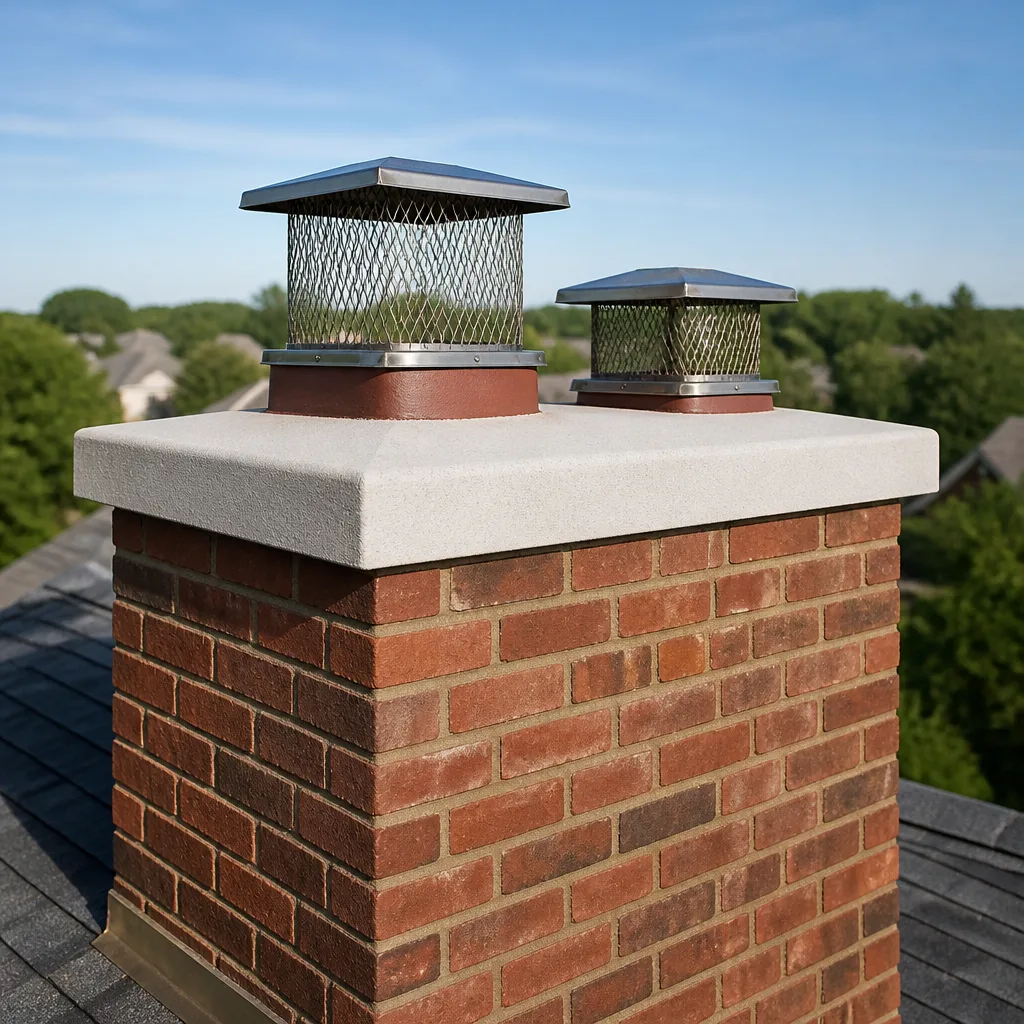
- The cap. Every chimney should have a cap: a cover that keeps rain, debris, birds, and animals out of the flue while letting smoke escape. Look for rust-through on the mesh, gaps where the cap meets the flue tile, or a cap that’s shifted off-center. A missing or damaged cap is the single most common reason water gets in.
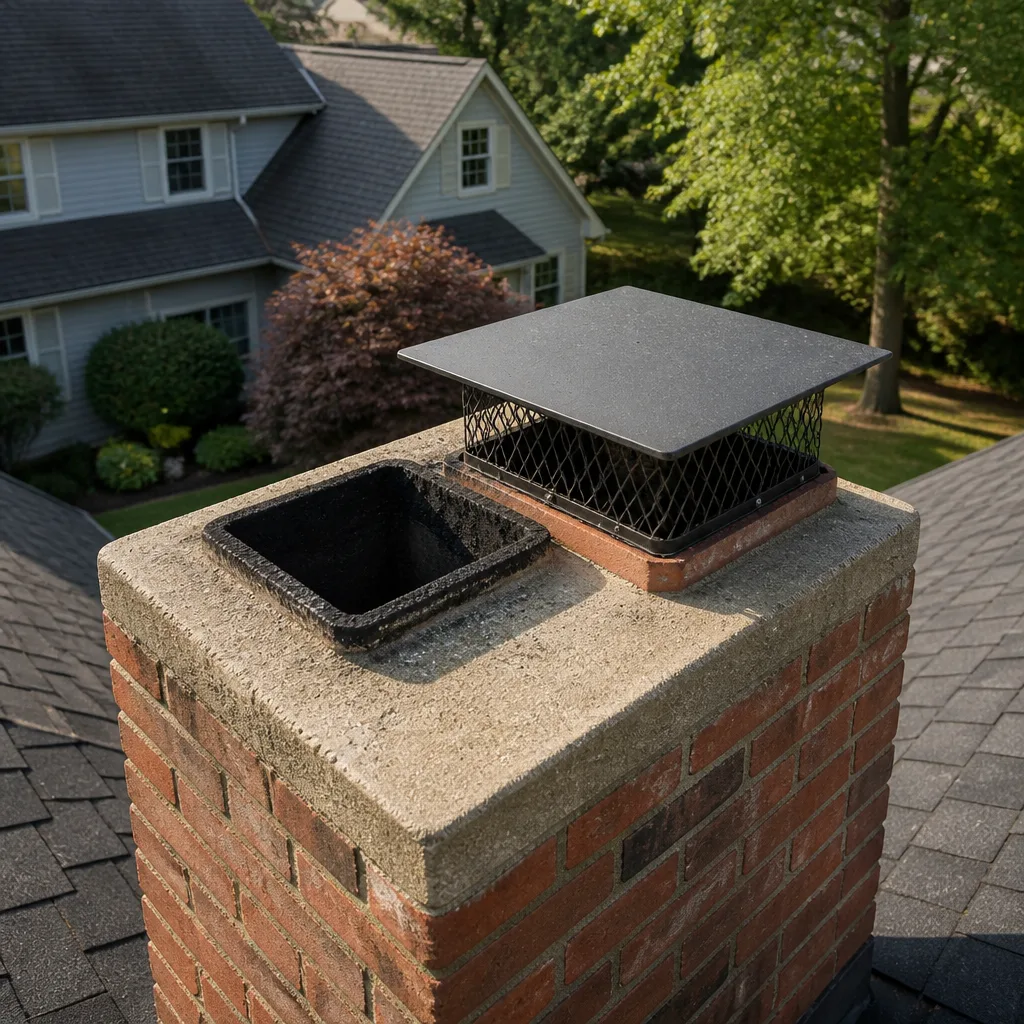
- The crown. This is the concrete or mortar cap on top of the chimney that sheds water away from the masonry. A healthy crown is uncracked, evenly sloped, and overhangs the chimney slightly. Fine cracks are worth watching. Cracks wide enough to catch a fingernail, or any crown that’s crumbling or separating from the flue tile, mean water is getting in.
- The flashing. This is the metal that seals the joint where the chimney passes through the roof. Check for loose edges, separated caulk lines, or metal that’s lifted. Wind and thermal movement pull flashing loose over time, and a small gap lets water run straight down the chimney into the attic.
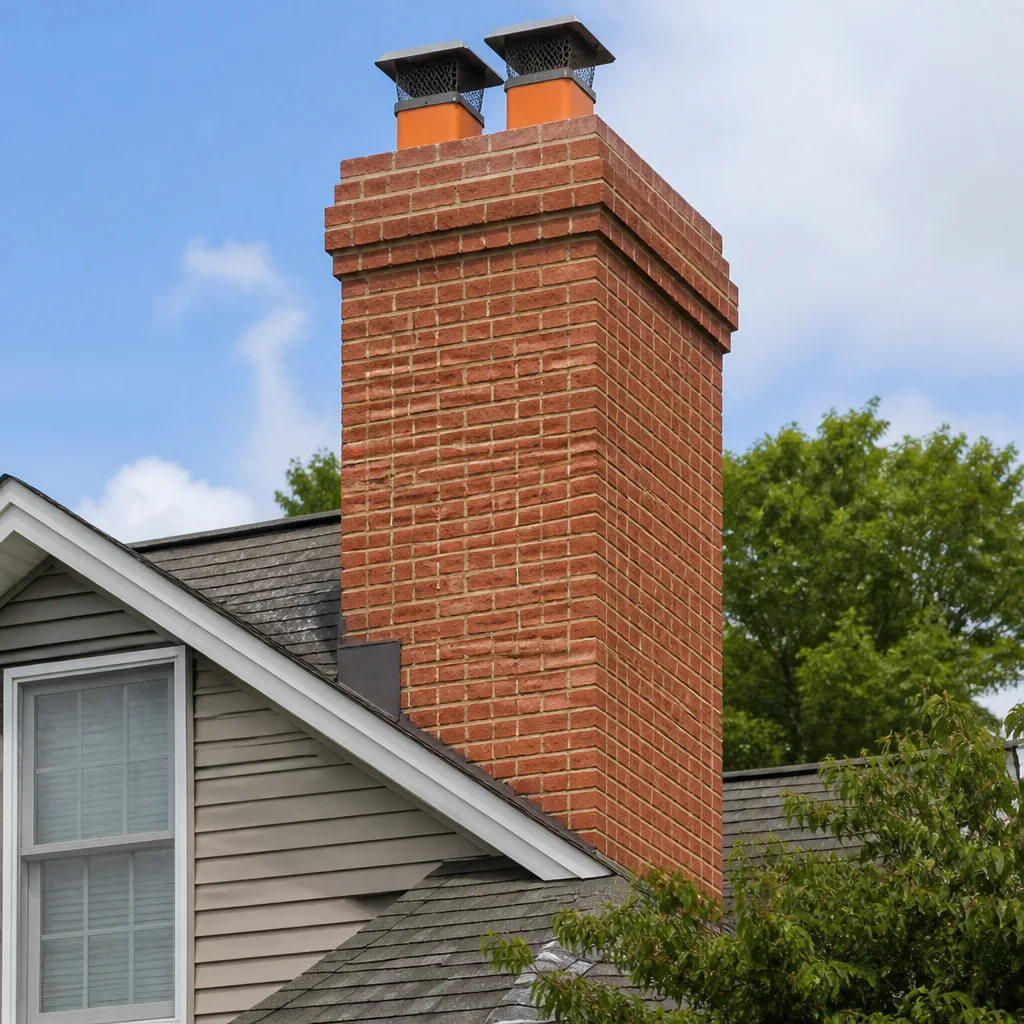
- The masonry. Look for cracked or missing mortar joints, white chalky staining (efflorescence, a sign of water moving through the brick), and spalling: brick faces flaking or popping away. A few spalled bricks near the top are the earliest sign that water is winning.
- The flue tile. From the ground, look at the chimney top. The clay flue tiles should be intact and show no visible cracks or gaps between sections.
If you see a damaged cap or a failing crown, that’s worth addressing promptly rather than waiting. Cap and crown work is preventive, and it’s cheaper than repairing the masonry damage water causes. Our chimney cap & crown service uses purpose-built components from Gelco and Famco rather than field-fabricated covers that fail within a few seasons. In a climate that delivers steady rain for months at a time, a proper cap and crown are the first line of defense for the whole system.
The Inside Checklist: What to Inspect From the Firebox and Damper
The inside checklist takes five minutes once a month during burn season. Start with a cold, fully-swept firebox, then work from the damper up and from the firebox out.
- Check the firebox walls. Look at the brick or refractory panels lining the firebox. Hairline cracks in the material are usually normal thermal stress. Cracks wider than the width of a nickel, chunks missing, or loose panels mean heat is reaching the surrounding structure. That’s a stop-burning situation until a pro looks at it.
- Operate the damper. Open and close it fully. It should move smoothly and seal snugly when closed. Grinding, sticking, or a damper that won’t stay open points to a warped plate or hinge. A damper that doesn’t seal lets heated air escape up the flue and lets cold air flood in when you’re not burning.
- Look for creosote. Shine a flashlight up the flue from the firebox. Creosote comes in stages: light soot you can brush away, then a hard black glaze, then a puffy brown or black crust that can catch fire. Hard, glazed, or crusty buildup anywhere in the flue means you’re due for a sweep before the next fire.
- Check the smoke chamber. The sloped area above the damper can collect creosote more heavily than the flue itself. A flashlight pointed up at an angle shows the accumulation.
- Look for water. Rust stains, damp masonry around the firebox, or a flue that smells like a wet basement after heavy rain all signal a leak from above: a bad crown, failed flashing, or a missing cap.
If the flue shows heavy buildup, a flat black glaze, or the smoke chamber looks blocked, that’s the signal to book a chimney sweep before you light another fire. Creosote that’s allowed to bake and harden between burns is harder to remove and carries a higher fire risk.
Call Now vs. Monitor Until Next Service: Matching Triggers to Action
The trick with any maintenance checklist is knowing which findings are urgent and which can wait. Homeowners tend to err in both directions: either panicking over a normal hairline crack or ignoring the crown that’s actually failing. Here’s how to sort it out.
Call now, before lighting another fire:
- Any crack in a firebox refractory panel wider than a nickel, or any missing chunk
- A flue that’s cracked, or has loose or missing tiles visible from the top
- Creosote buildup that’s glazed, hard, or puffy (that’s a fire risk)
- A cap that’s come off entirely, or is letting water into the flue
- Water staining or damp masonry inside the firebox, especially after rain
- A damper that’s stuck open, stuck shut, or doesn’t seal
- Any smell of smoke coming into the living space when the fireplace is running
Monitor until your next annual service:
- A crown with fine hairline cracks (not separated, not crumbling)
- A few spalled brick faces near the top, without missing mortar
- Mild efflorescence that hasn’t spread
- A damper that’s stiff but opens and closes fully
- Light soot visible in the smoke chamber without heavy creosote
Anything on the “call now” list is a real problem, not a sales pitch. If you’re ever unsure, an inspection tells you exactly what’s going on and what’s needed. The one result we won’t do is tell you that you need a full liner or a rebuild when the evidence doesn’t support it. Every recommendation we make comes with photos from the camera inspection, so you can see for yourself what we’re looking at. And when a finding can safely wait until next season, we’ll say that plainly.
Seasonal Maintenance Triggers Specific to Tacoma
Chimneys don’t care about the calendar, but they do care about weather. Tacoma’s cycle runs from wet to dry to wind, and each transition exposes specific parts of the system. Building your checklist around the seasons means you’re inspecting for the right problem at the right time.
Post-Rainy-Season Cap and Crown Inspection (April – May)
This is the single most important check in Tacoma. Once the rainy season starts to taper off, walk out and look at the cap and crown with binoculars. Focus on water-related damage: cracks in the crown concrete, white staining or soft spots in the masonry, rust streaks down the side of the chimney, and any sign that the cap has shifted. If water got in during the winter, this is when you’ll see the evidence. Catch it now, while the chimney can dry out before the next wet season, and the repair is smaller.
Pre-Burn-Season Liner Check (September – October)
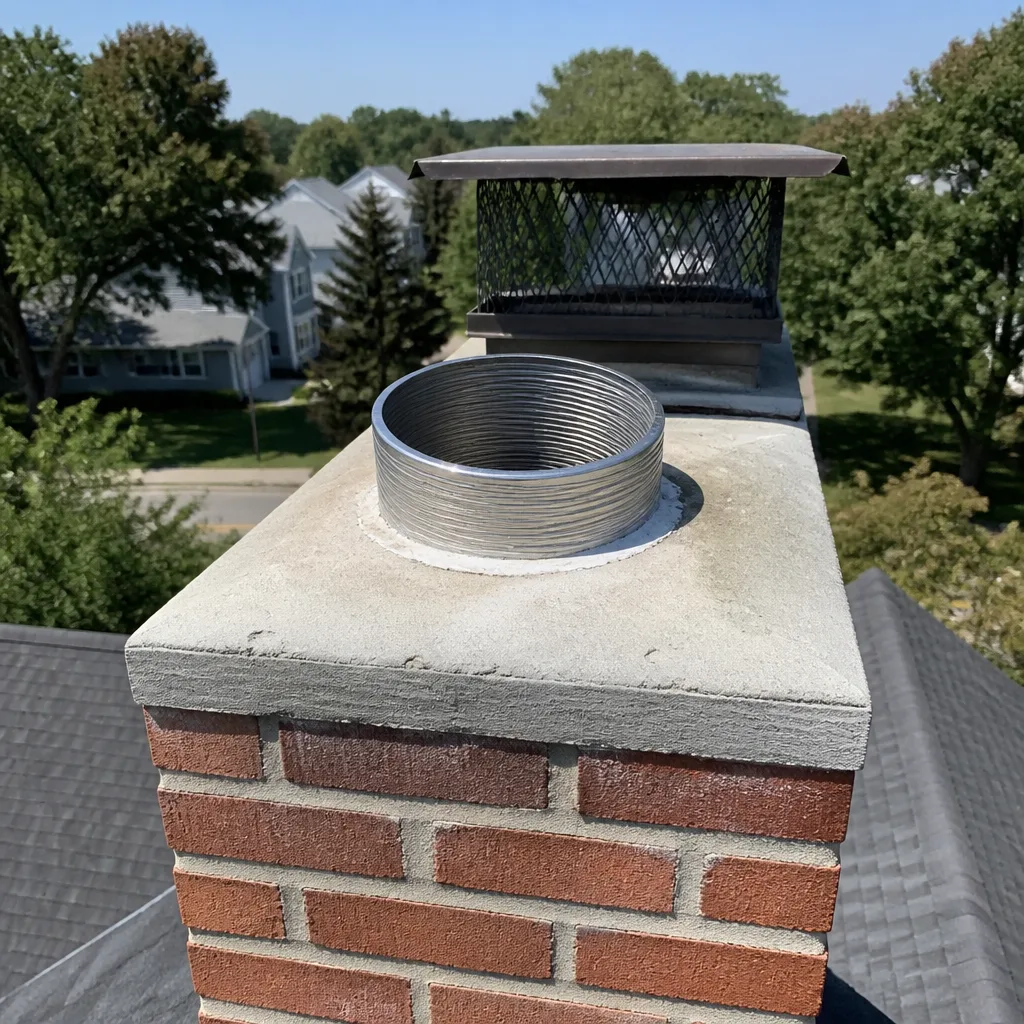
Before you light the first fire of the year, run the inside checklist. Check the flue for what the summer’s moisture did to the liner: any spalling or cracking in the clay tiles, any loose sections, or any sign of water intrusion. For masonry flues that have moved or cracked, HeatShield flue resurfacing can restore the interior surface without a full liner replacement, and it’s engineered specifically for that job. If the flue needs a full reline, DuraFlex flexible stainless systems handle configurations that rigid liners can’t reach. Either way, catch it before burn season, not after.
Post-Windstorm Flashing Assessment (October – March)
Pierce County gets wind events on a fairly regular basis through the fall and winter. After a significant blow, check the flashing at the roof where the chimney passes through. Look for lifted metal, gaps, or missing caulk. Wind moves the roof and chimney at different rates, and flashing is the joint that absorbs that movement. A small leak caught early is cheap; a small leak left for a season is a rotted roof deck and a much bigger repair bill.
Running these three checks alongside your regular walkaround means the chimney gets inspected for the problem that’s actually likely, not a generic list. It’s how our technicians approach inspections in Tacoma, and it’s how we work with the brands certified specialists rely on: Olympia Chimney for components, Gelco and Famco for crown and cap installs, HeatShield for flue restoration.
What You Can Handle Yourself vs. What Needs a Credentialed Sweep
A checklist is most useful when you’re clear on which items you own and which belong to a professional. Most owners can safely do a handful of things. Everything else is a bad idea to DIY, and some of it is genuinely dangerous.
Owner-manageable:
- Visual walkaround with binoculars, done twice yearly
- Clearing leaves, twigs, and bird nests off the top of a cap (from ground level, with a long-handled tool, from a safe position)
- Operating and inspecting the damper
- Keeping a small log of findings and dates
- Arranging your own pre-burn-season call so it doesn’t get forgotten
Not owner-manageable:
- Getting on the roof. A fall is a serious injury, and chimney work happens on some of the steepest, most exposed roof surfaces on the house. Leave roof access to the professional.
- Brushing the flue. Proper sweeping means rods, the right brushes for the flue type, dust control inside the living space, and an understanding of what’s below the brush. It’s a job, not a task.
- Inspecting with a camera. When the inside of a flue matters, the answer comes from a camera, not a flashlight from the firebox.
- Repairing the liner, crown, or flashings. These components live at height or seal a fire path. They need a trained technician.
- Any gas-appliance work. A gas fireplace has a burner, pilot, vent, and combustion path that should only be worked on by a trained pro.
When the checklist turns up a problem in the “pro” column, the right next step is a professional inspection. That inspects the flue with a camera and produces a photo report, so the repair can be scheduled with real information rather than a guess. If you need structural work after the inspection, our fireplace repair service covers firebox, damper, and fireplace-facing fixes alongside chimney structural repair, so the whole system gets handled together instead of referred out.
How to Log Your Maintenance History (and Why It Matters in Pierce County)
A chimney maintenance log is a small piece of paperwork with surprisingly large value. Keep it simple: a notebook, a spreadsheet, or a folder of photos. Log the date, what was checked, what was found, and what was done. If a professional does an inspection, keep the report and the photos, not just the invoice.
Here’s what to record every time:
- Date and season. For example, “April post-rainy-season check” or “October pre-burn check.”
- Component inspected. Cap, crown, flashing, masonry, damper, firebox, flue.
- Finding. Nothing noted, fine crack, spalled brick face, glazed creosote, water stain.
- Action. Monitored, called for service, repaired, swept.
- Photo. One wide shot and one close-up per finding. Photos age well; memories don’t.
Why does this matter so much in Pierce County? Two reasons. First, insurance. If you ever have a chimney-related claim, your policy or adjuster may ask for proof of maintenance. A dated log with inspection reports demonstrates that the system was being looked after, which can matter for how a claim gets handled. Second, home sales. Chimney condition is a standard concern in a home inspection, and a buyer’s inspector will flag any visible crown, masonry, or liner issues. A documented history of annual inspections and any repairs, complete with photo evidence, turns a red flag into a resolved item and keeps a sale moving. Our inspections are structured to satisfy exactly this need: documentation suitable for disclosure and insurance, produced with the camera and photos that back it up.
Your Annual Chimney Maintenance Timeline
If you want one page to print and pin, here’s the annual schedule. The exact weeks will shift a little year by year, but the order and reasoning are stable.
- April – May: post-rainy-season exterior check. Walkaround with binoculars. Cap, crown, flashing, masonry. Log findings with photos.
- May – June: repair season. If the spring check found crown cracking, flashing gaps, or cap damage, schedule the repair now. Dry weather means the masonry can be properly prepped and cured.
- July – August: interior inspection. Camera inspection of the flue. Confirm the liner and smoke chamber are in shape before the season starts. This is the right time to find and address a liner problem: HeatShield resurfacing or DuraFlex relining can be planned without pressure.
- September – October: pre-burn-season sweep. Full sweep if creosote has accumulated. Run the inside checklist one more time.
- November – March: burn season checks. Monthly firebox and damper checks. Post-windstorm flashing look. Watch for smoke in the living space.
- Any time: annual professional inspection. Once a year, without exception. The National Fire Protection Association recommends an annual chimney inspection, and it’s the one item on the list that catches what you can’t see.
The whole schedule takes about an hour of your attention across the year plus one professional visit. That hour of attention is what separates a chimney that quietly serves the house for a long time from one that needs a liner replacement next spring. The first page of that effort is Chimney Sweep Tacoma Pros territory: alongside your own checks, the professional’s annual visit is the anchor.
Common Mistakes to Avoid
- Waiting for visible smoke to call. A chimney can be badly compromised and still draft fine, right up until it doesn’t. Visual inspection from the ground and the firebox catches problems that performance never will. Don’t use “it’s working fine” as your maintenance plan.
- Skipping the walkaround in a wet year. Tacoma’s winters vary, and a wet one puts more stress on the crown and flashing than a mild one. If you check only in October, you’ll miss the damage the rainy season caused and find it the following year after it’s spread. Spring checks exist for a reason.
- Cleaning the firebox with household chemicals. Standard oven or bathroom cleaners can leave residue that reacts with the refractory material and affects how it handles heat. Stick with a brush and a shop vacuum for cold ash, and leave the interior cleaning to the sweep.
- Burning wet or green wood. It produces far more creosote than seasoned wood, and it deposits the problems faster than a sweep can clear them. Seasoned hardwood, split, and covered, is the standard.
- Treating the damper as decoration. Leaving it open after a fire clears lets heated air escape and cold air rush in, which can accelerate condensation in the flue. Close it once the fire is fully out.
- Not writing anything down. A problem spotted and then forgotten until the next fall is a problem that grew all summer. The log is what turns a checklist from a one-time activity into actual maintenance history.
- Assuming a sweep-only service is enough. A sweep cleans. It doesn’t examine the crown, flashing, or liner with a camera, and it doesn’t repair what it finds. Maintenance means a service that includes inspection and repair capability, so a finding becomes a fix instead of a second appointment.
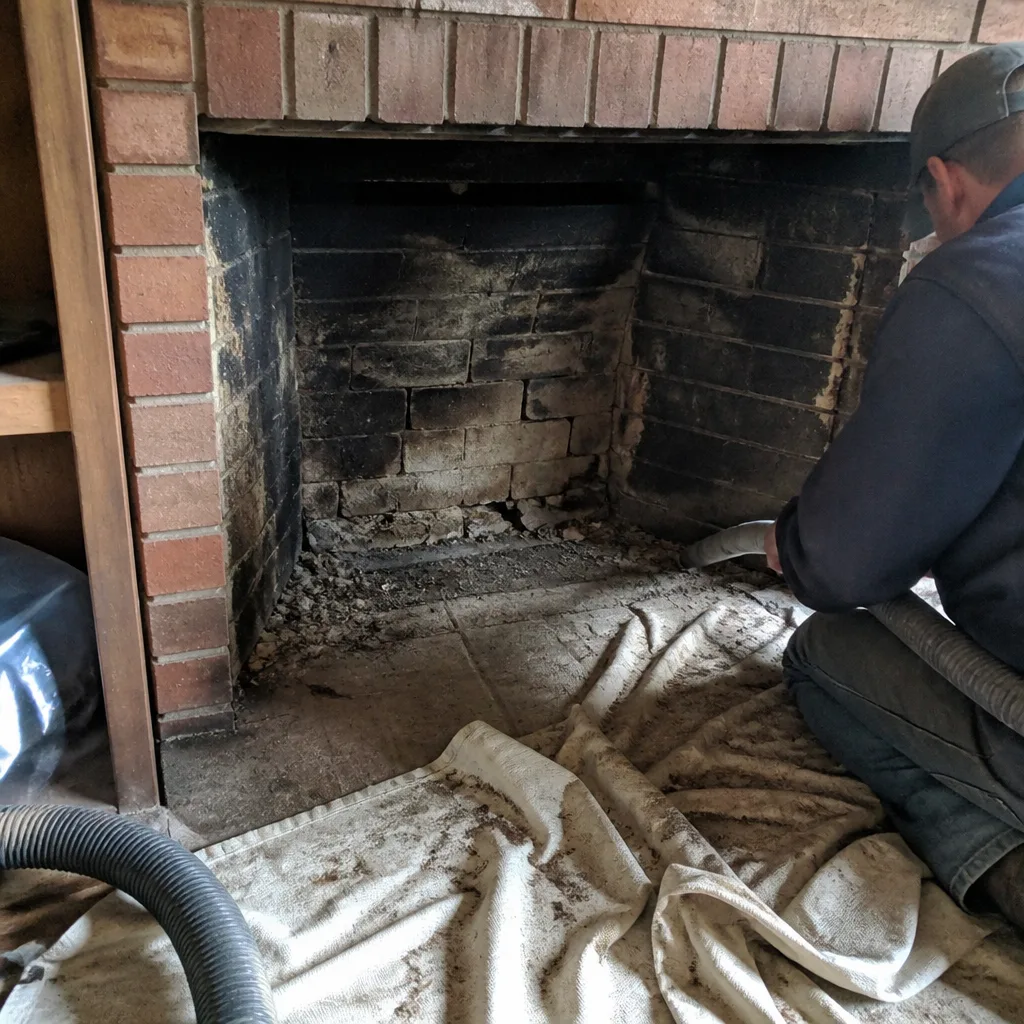
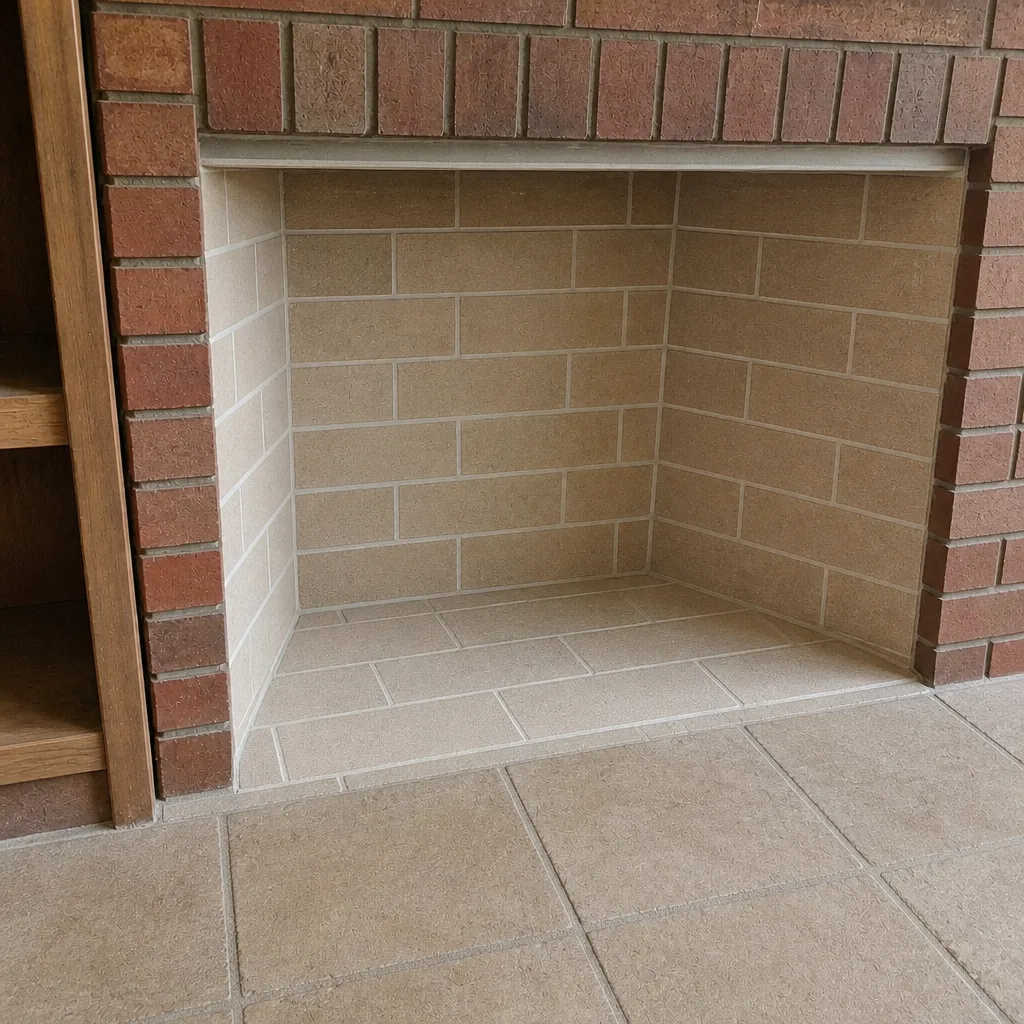
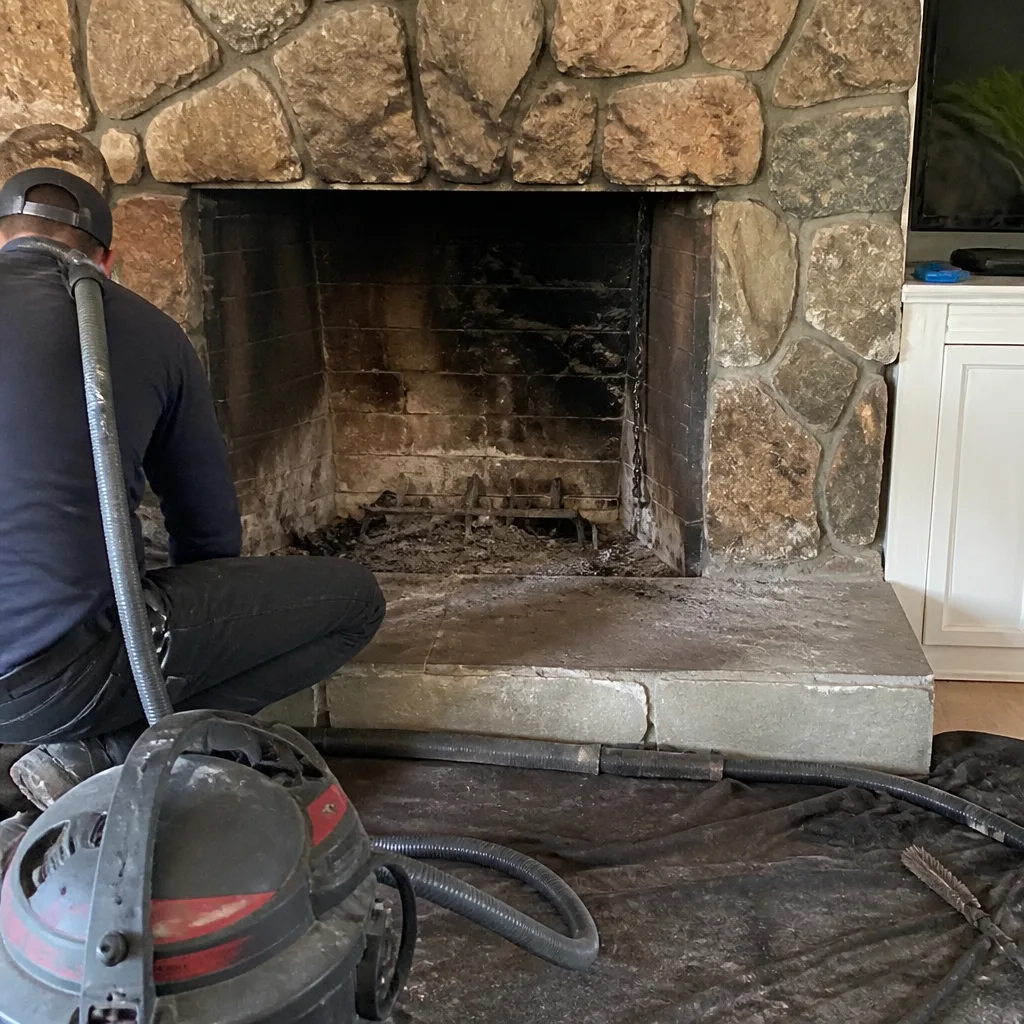
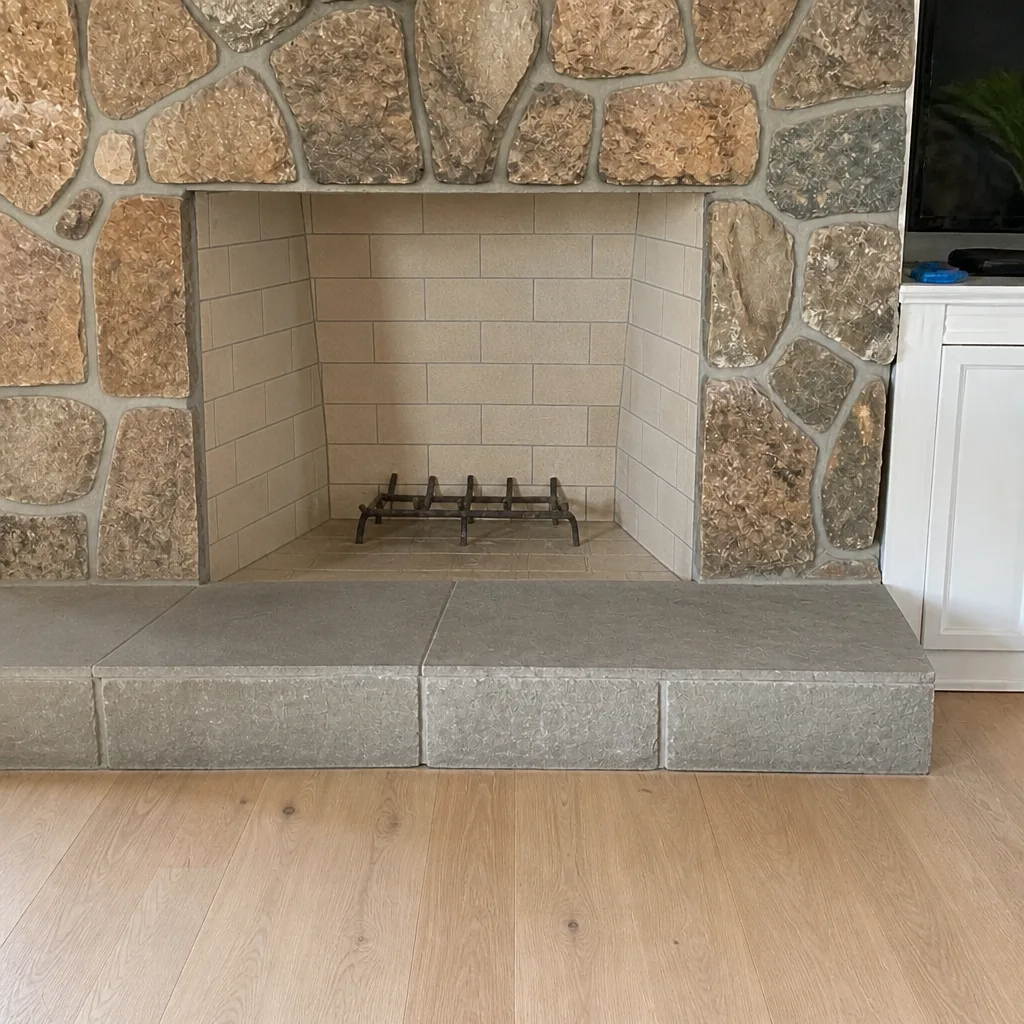
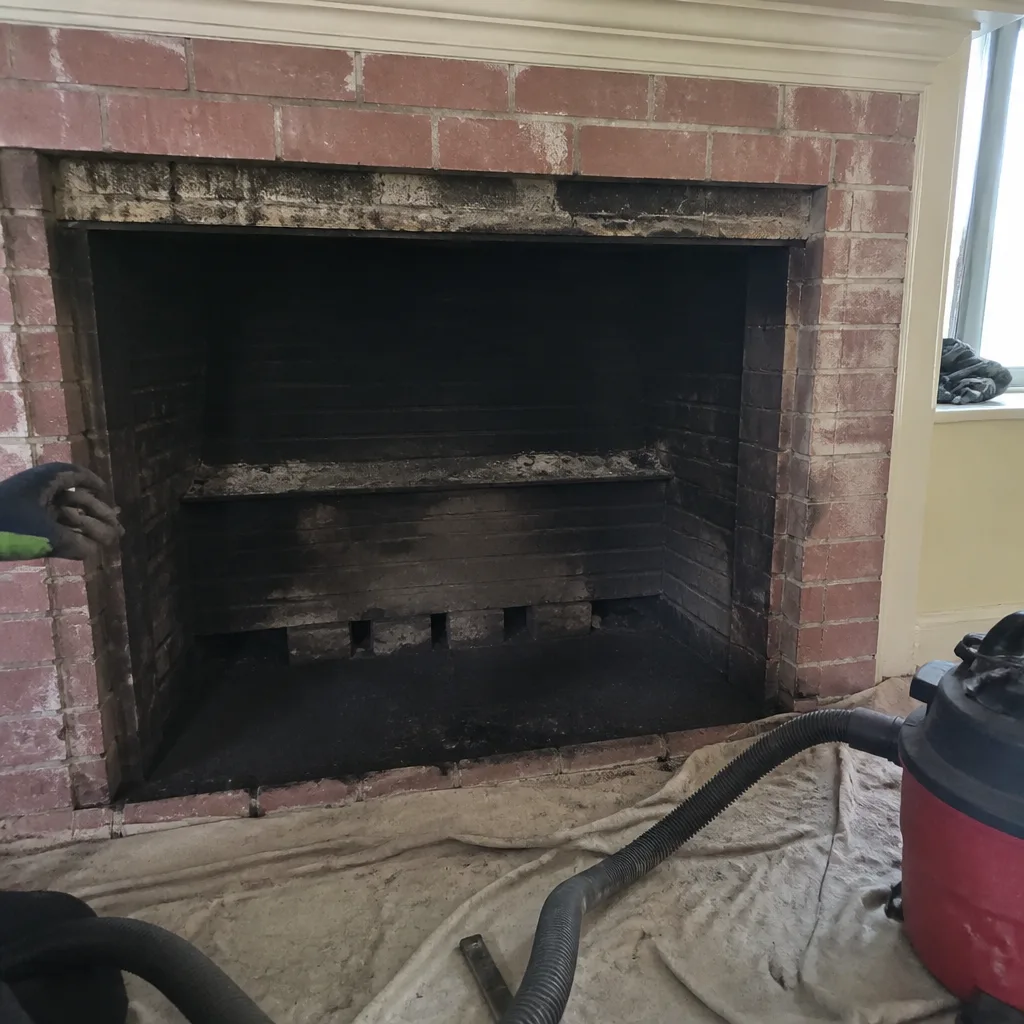
See the difference
 Before
 After
 Before
 After
 Before
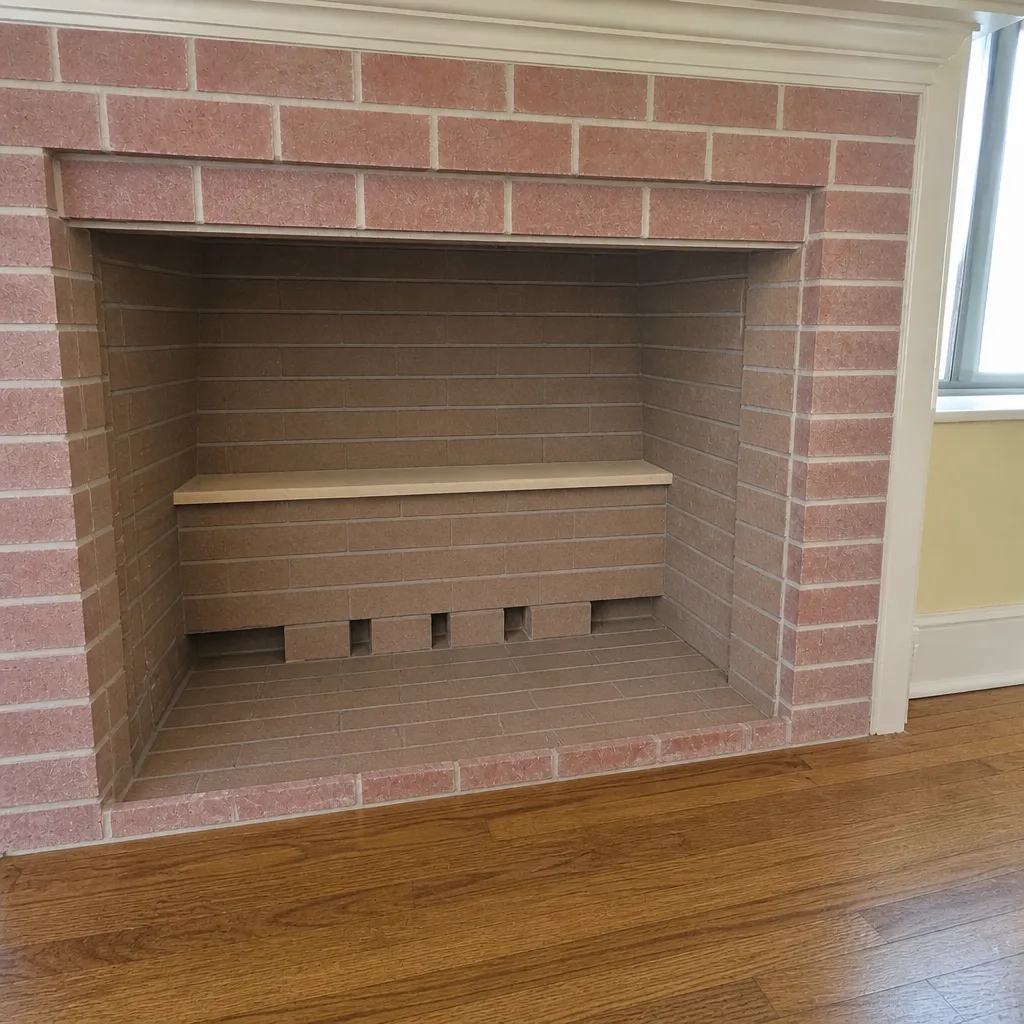 After
When to Call a Professional
Call a professional when your checklist turns up anything on the “call now” list: cracked firebox panels, glazed creosote, a cracked flue, a damaged or missing cap, water staining inside the firebox, or a damper that won’t seal. Call if you smell smoke indoors when the fireplace is running. Call if it’s been more than a year since the last inspection, no matter what the checklist says. A trained technician with a camera sees what a flashlight can’t, and our technicians have up to 11 years of experience matching findings to the right repair. Chimney Sweep Tacoma Pros offers free estimates in Tacoma – call (877) 820-8112. We answer 24/7, and fast dispatch runs from 7am to 7pm, Sunday through Friday.
Frequently Asked Questions
Once a year, at minimum. The National Fire Protection Association recommends an annual chimney inspection, and the wet-dry-wind cycle in Tacoma makes that annual visit especially valuable. Add a sweep when the flue shows heavy or glazed creosote, and book a professional check any time your own walkaround turns up a component on the “call now” list. Call (877) 820-8112 to schedule yours; estimates are free.
A professional inspection examines the whole system: cap, crown, flashing, masonry exterior, firebox, damper, smoke chamber, and flue interior via camera. You get a written report with photos of what was found so the findings are verifiable, not just asserted. Our inspections are structured to satisfy home-sale disclosure and insurance documentation needs. If a repair is needed, the same visit can typically address it or schedule it. Call (877) 820-8112 for an exact quote on the inspection.
A failing crown shows cracks wide enough to catch a fingernail, crumbling or separated concrete, or a visible gap between the crown and the flue tile. Fine hairline cracks alone are worth monitoring, not panicking over. Any separated or crumbling crown should be repaired before the rainy season to stop water reaching the masonry. Our chimney cap & crown service uses Gelco and Famco components designed for the job. Call (877) 820-8112 for a free estimate.
No, not safely or effectively on a typical chimney. Proper sweeping means the right brushes for the flue type, dust control inside the living space, working at height or from the roof, and evaluating what the brush turns up. Glazed creosote in particular doesn’t come off with a consumer brush. Leave the flue to a professional sweep and keep your own effort on the walkaround checklist. Call (877) 820-8112 for a sweep quote.
Documented annual inspections, dated reports with photos, and records of any cap, crown, flashing, or liner repairs. Together those show a buyer’s inspector and an adjuster that the system is maintained. Keep the reports and photos, not just the invoices. If you’ve moved into a Tacoma home without a chimney history, a single inspection creates the starting record. Call (877) 820-8112 to schedule one.
Yes. A chimney can draft correctly while the crown crumbles, the flashing leaks, or the liner surface has cracked underneath. Performance is not a condition report, and the things an inspection catches are the ones you want to find before they turn into a costly structural repair. Call (877) 820-8112 to book a camera inspection; estimates are free.
The Bottom Line
A chimney maintenance checklist works when it’s tied to real triggers, not vague encouragement to “check for damage.” Run the exterior walkaround after the rainy season and before burn season. Run the firebox and damper check monthly while you’re burning. Sort what you find into “call now” and “monitor,” using the specific indicators in this guide. Keep a dated log with photos so the record holds up at resale and with insurance. And once a year, without exception, book a professional inspection so a trained eye with a camera evaluates the flue, the smoke chamber, and the crown. That’s the whole system: cap, crown, liner, firebox, flue. In Tacoma, where the wet season does most of the damage, the annual inspection is what makes the rest of the checklist meaningful.
If you’d rather have the yearly visit handled, call Chimney Sweep Tacoma Pros at (877) 820-8112 for a free estimate. We answer 24/7. Fast dispatch from 7am to 7pm, Sunday through Friday. We inspect with a camera, show you the photos, and repair what we find – no second contractor, no second appointment.
Written by the team at Chimney Sweep Tacoma Pros.